Jump-start a dead battery safely
Jumper cables are simple until you hook them wrong. Do it right and you'll avoid sparks, ruined electronics, and a tow you didn't need.
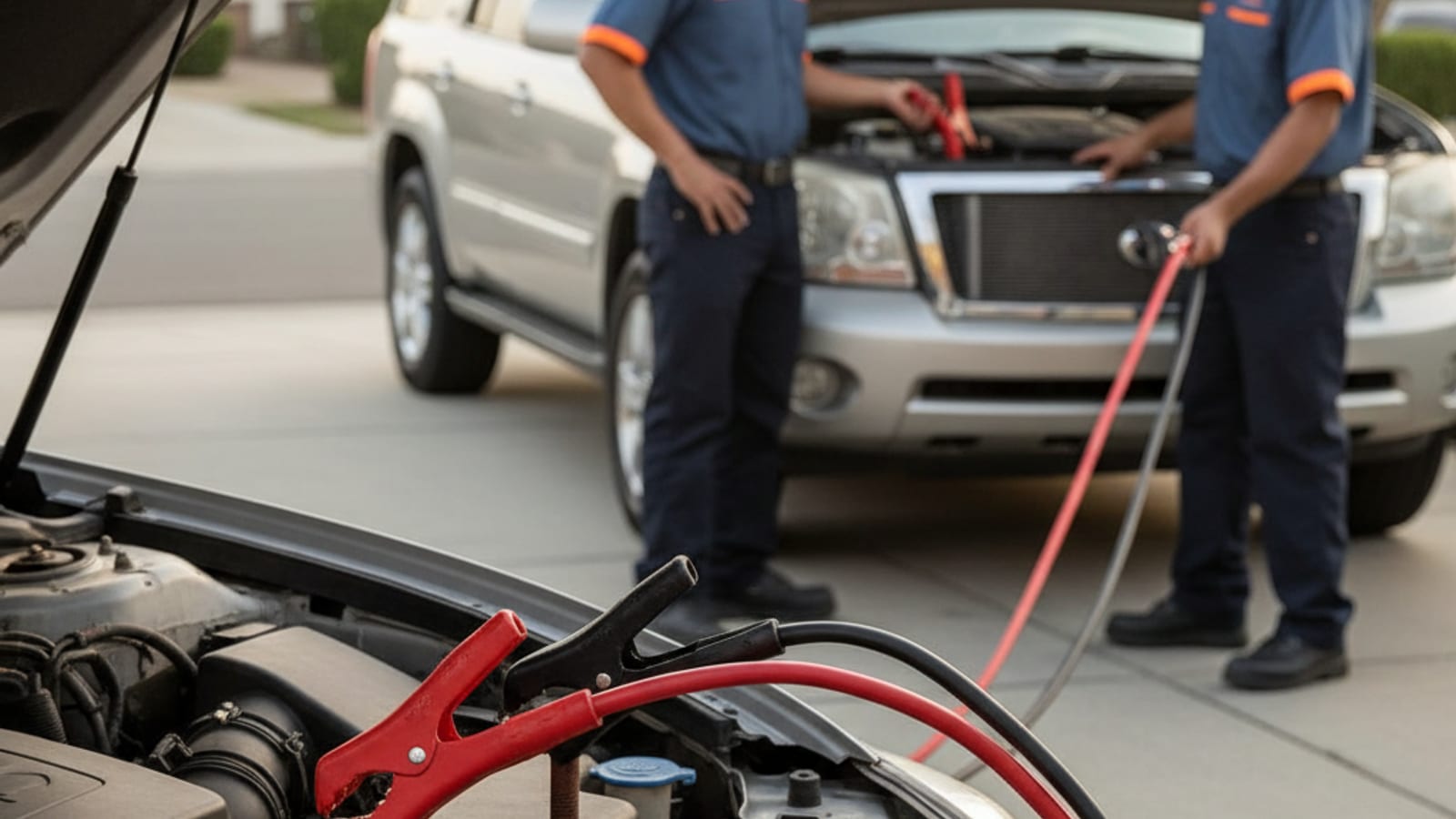
Connect the jumper cables in the correct order, start the working vehicle, then try the dead one. Keep the clamps apart and follow both vehicles' manuals. Stop if the battery is cracked, leaking, swollen, frozen, or sparking heavily. If the car still won't start, disconnect safely and call for roadside help.
What you'll learn
- The correct red-then-black clamp order (and why it matters)
- Why the last clamp goes on a bare metal point, not the dead battery
- When a jump-pack beats a cable-to-cable jump
- Signs that the alternator is bad and a jump will not fix the car
Step by step
- Pull the donor car close enough for the cables to reach. Both cars OFF.
- Clamp RED to POSITIVE (+) on the dead battery.
- Clamp RED to POSITIVE (+) on the donor battery.
- Clamp BLACK to NEGATIVE (−) on the donor battery.
- Clamp BLACK to bare metal on the dead car's engine block (not the battery).
- Start the donor. Wait 2 minutes. Start the dead car. Let run 10 minutes before driving.
If the car cranks weakly or dies again within an hour, the alternator or battery has failed. A second jump will not help, so call for a tow to a shop. Philadelphia batteries take a beating from both ends of the year. Summer heat accelerates the corrosion that degrades a battery, while deep cold reduces the current it can deliver and thickens the oil the starter must turn. If your battery is more than three years old and has died once this winter, replace it before it strands you again.
Why Philadelphia kills batteries
Winter exposes weak batteries, but summer often causes the damage. Deep cold reduces the current a battery can deliver. It also thickens engine oil, so the starter has to work harder. A battery that seemed fine in November may fail during the first hard freeze.
Heat speeds up corrosion inside the battery. That damage can build through summer without an obvious warning. The failure appears months later, when a cold start demands more power than the battery can supply. Treat slow cranking after a hot summer as an early warning, not a winter surprise.
The rowhome problem
Getting a second vehicle close enough can be the hardest part. South Philadelphia, Point Breeze, Fishtown and Kensington have tight rowhome blocks, permit parking and little room to reposition cars. Jumper cables have a fixed reach. Don't stretch them across traffic or let either vehicle block the street.
A portable lithium jump pack doesn't need a donor vehicle. It can reach a car parked bumper to bumper or facing the wrong direction. Check that the pack supports your vehicle and follow its instructions.
During a declared snow emergency, parking is banned along Philadelphia's 110 miles of designated snow-emergency routes. Don't double-park a donor car there. That can turn one disabled car into two vehicles exposed to ticketing and towing.
When a jump will not fix it
Listen to what the car does before trying again. Different sounds point to different problems.
- It cranks normally but never starts: The battery is already turning the engine. The problem may involve fuel, ignition or another engine system. Repeated jumps won't solve it. Arrange a tow if the car won't start.
- It starts with assistance but dies after the jump source is disconnected: The charging system may not be keeping the engine running. Driving becomes a gamble on where the car loses power. A tow to a repair shop is the safer choice.
- Nothing works, including the dash and dome light: Check for loose or badly corroded battery terminals. A failed connection, discharged battery or damaged cell can produce complete silence. If the connections are secure and a jump changes nothing, arrange a tow.
- You hear rapid clicking: The starter isn't receiving enough usable power. A jump may help if low battery voltage is the cause. If the clicking continues with a proper connection, stop trying and have the car inspected.
Where you are standing matters more than the battery
A dead battery in a driveway is inconvenient. A disabled car in a travel lane is an immediate traffic hazard. Don't open the hood while vehicles are passing beside you.
I-95 carries roughly 160,000 vehicles each day near Cottman Avenue. The Schuylkill Expressway records 400 to 500 crashes a year, and the Conshohocken Curve is a known pinch point. Roosevelt Boulevard is also one of the country's deadliest roads.
If you're stopped in a live lane, call for help. When you can exit safely away from traffic, move behind a barrier and stay clear of the roadway. If leaving the vehicle would put you directly into moving traffic, keep your seat belt on and call from inside. The battery can wait until the scene is protected.
After the jump
The alternator needs sustained engine operation to restore some charge. Idling in a parking space isn't a dependable substitute for driving. A short trip to the corner store may leave too little charge for the next start.
If the car runs normally and the route is safe, drive it without unnecessary stops before shutting it off. Then have the battery and charging system tested. Testing can separate an aging battery from an alternator problem.
Inspect the terminals after the engine is off. Corrosion can restrict current even when the battery is healthy. Have heavy buildup cleaned properly, and make sure the connections are tight. If the battery leaks, looks swollen or smells unusual, don't handle it or attempt another jump.
What to tell the assigned operator
Give the car's exact location and say whether it's in a travel lane. Tell the operator whether it remains in gear or can be shifted into neutral. Also identify an all-wheel-drive or electric vehicle before dispatch. The owner's manual may require a flatbed or a specific towing method.
Rather have a pro handle it?
Towing and roadside service across Philadelphia plus Delaware, Montgomery, Bucks and Chester counties. One local line, taking calls 24/7.
Keep learning.
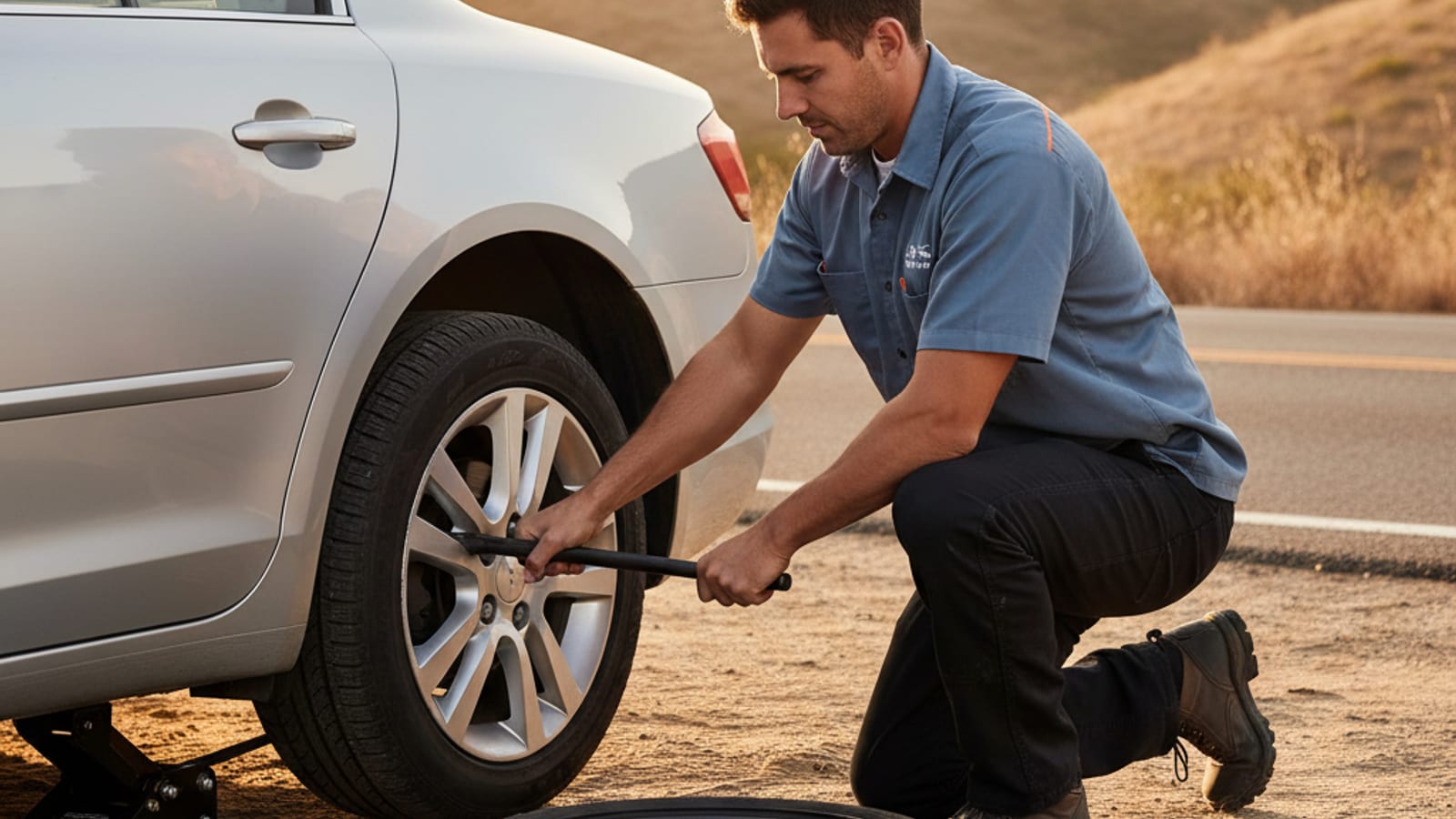
Change a flat tire on the side of the road
The difference between a 20-minute shoulder stop and an hour on the phone with a tow company is knowing where the spare and jack live before you need them.
What to do if you slide on ice or hit a flooded viaduct
Philadelphia winters glaze bridges and ramps before flat streets, and a heavy rain fills a viaduct underpass faster than it looks. First step: stop making it worse.
Prepare your vehicle for a tow
A few minutes of prep before the tow truck arrives saves time, avoids damage, and makes the whole call go faster.