Change a flat tire on the side of the road
The difference between a 20-minute shoulder stop and an hour on the phone with a tow company is knowing where the spare and jack live before you need them.
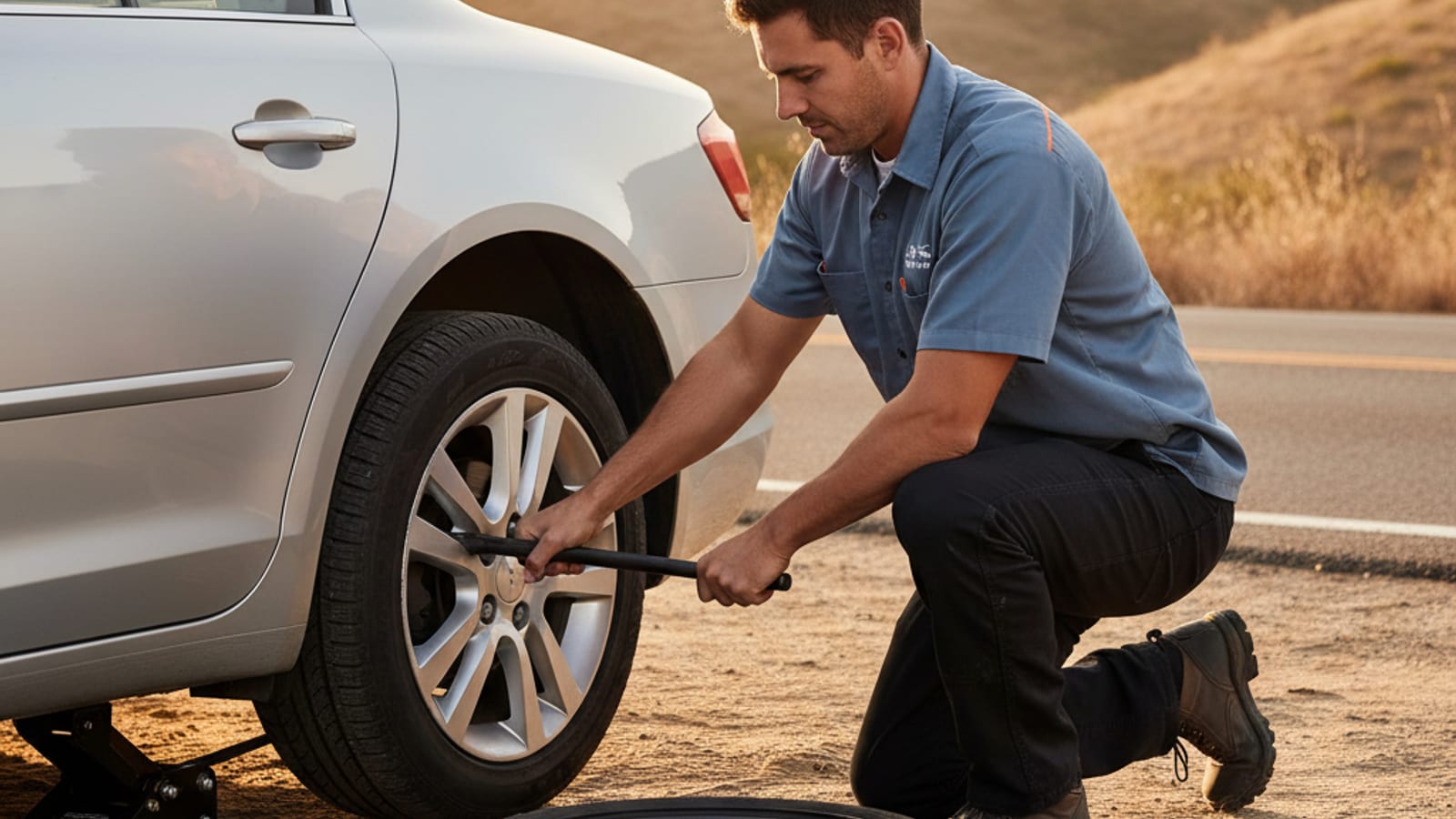
Move as far from traffic as possible, set the parking brake, place the jack at the marked lift point, and install the spare. Never crawl under a car supported only by a jack. If the shoulder is narrow, the ground is soft, or traffic feels unsafe, stay inside with your seat belt on and call for help.
What you'll learn
- Why the traffic-side of a vehicle is the dangerous side for a DIY change
- Where the jack point is on most modern vehicles (check the owner's manual)
- The correct lug-nut loosening pattern (star/cross, not circle)
- When to call for a tow instead - highway shoulders, curbs without room, or damaged sidewalls
Step by step
- Pull off into a safe flat spot - away from traffic, off a shoulder if possible.
- Set the parking brake. Turn on hazard lights. Put the transmission in park (or 1st gear on manual).
- Loosen the lug nuts half a turn each before jacking - while the tire is still on the ground.
- Position the jack at the factory jack point under the frame. Raise until the tire is 1-2 inches off the ground.
- Remove the lugs, swap the flat for the spare, hand-tighten lugs in a star pattern.
- Lower the car fully. Torque the lugs in the same star pattern.
- Drive directly to a tire shop. A compact spare has speed and distance limits, printed on the tire itself or in the owner manual, and they are firm.
If you are on the shoulder of I-95, I-76, I-676 Vine, Roosevelt Blvd or the Blue Route, call for a tow to a safe lot instead. The Philadelphia expressway system carries some of the heaviest urban traffic in the country and in places there is no usable shoulder at all, so a roadside tire change there is genuinely dangerous. Stay in the vehicle and call for a tow to a safe lot. Highway crews may clear a hazard, but they do not change your tire and they do not tow you.
The first decision is whether to get out
The tire can wait if moving traffic is close to the car. Do not attempt a roadside change from a travel lane or narrow left shoulder on I-95. That corridor carries roughly 160,000 vehicles each day. The same warning applies on the Schuylkill Expressway, especially where the shoulder effectively disappears through the Conshohocken Curve.
Roosevelt Boulevard, or US-1, is one of the nation's deadliest roads and has had speed cameras since 2020. Any bridge approach can also leave little escape room. If you can exit safely, use the passenger-side door. Move behind a barrier and call for help. Do not kneel beside moving traffic to save a tire.
What is actually in your trunk
Open the trunk before assuming you have a usable spare. Some cars carry a compact spare. Its speed and distance limits should appear on the tire or in the owner's manual. Treat those limits as firm, then drive directly to a tire shop.
Other cars carry an inflator and sealant kit. Sealant may close a small puncture through the tread. It cannot repair a sidewall cut, a separated tire, or damage from a blowout. It can also ruin some tire-pressure sensors. Tell the tire shop if sealant went into the tire.
A growing number of cars carry neither option. They may depend on run-flat tires or roadside service instead. Check before jacking up the vehicle. If there is no spare, inflator, or usable run-flat tire, the assigned operator will need to move the car.
Philadelphia's pothole season is real
Winter freeze-and-thaw cycles break pavement across the Philadelphia region. Damage often appears after the first thaw and continues through spring. A hard pothole strike can damage more than the rubber.
A bent rim may no longer hold the tire bead. The car may also pull, shake, or sit unevenly because the alignment or suspension took the impact. Even if the tire still holds air, have those parts checked. If the rim is bent or the car cannot roll cleanly, use a tow instead of mounting the spare.
Some city streets are unsafe too
Highways are not the only problem. On Philadelphia's rowhouse grid, a narrow one-way street with cars parked on both sides may leave no safe place to kneel. Do not work with your body extending into the traffic lane.
The ground matters as much as traffic. A jack may not sit securely on Old City cobblestone or a sharply crowned street. Call for roadside help and let the assigned operator choose a safer working position. If the vehicle can be moved without further damage, move it only to firm, level ground away from traffic.
Philadelphia also has 110 miles of designated snow-emergency routes. Once a snow emergency is declared, those routes become tow-away zones. A car left there while you arrange tire help may be taken.
When it is a tow, not a tire
Stop trying to complete the change when the equipment or damage makes the job unsafe. Arrange a tow when any of these applies:
- There is no spare or repair kit.
- The rim is cracked, bent, or unable to hold the tire bead.
- The tire has a sidewall cut or blowout damage.
- Two or more tires are flat.
- A lug nut will not break loose with the supplied wrench.
- The wheel uses a locking lug and the key is missing.
- The factory jack point is damaged, blocked, or unsafe to reach.
A vehicle with a damaged wheel should generally travel on a flatbed rather than a wheel lift. The damaged wheel may not roll safely behind the truck. Tell the referral line what happened so it can match you with an operator carrying suitable equipment. The operator sets the price and provides the quote before dispatch.
What to tell the assigned operator
Give your location by cross street, highway exit, or mile marker. Say whether the car is in a travel lane or behind a barrier. Identify the damaged wheel and describe any rim damage. Also tell the operator whether the vehicle is all-wheel drive or electric, since that affects how it should be loaded and moved.
Rather have a pro handle it?
Towing and roadside service across Philadelphia plus Delaware, Montgomery, Bucks and Chester counties. One local line, taking calls 24/7.
Keep learning.
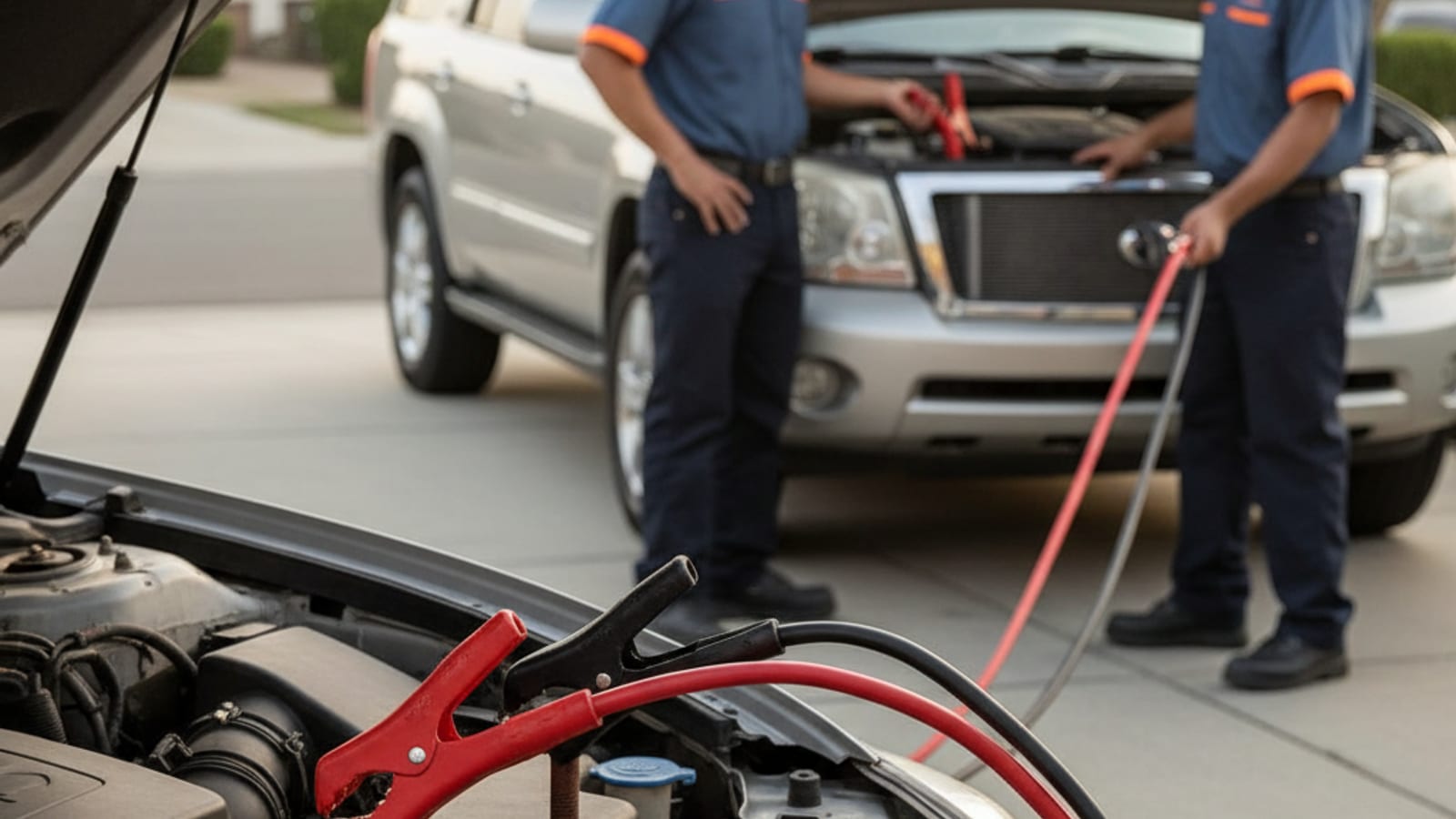
Jump-start a dead battery safely
Jumper cables are simple until you hook them wrong. Do it right and you'll avoid sparks, ruined electronics, and a tow you didn't need.
What to do if you slide on ice or hit a flooded viaduct
Philadelphia winters glaze bridges and ramps before flat streets, and a heavy rain fills a viaduct underpass faster than it looks. First step: stop making it worse.
Prepare your vehicle for a tow
A few minutes of prep before the tow truck arrives saves time, avoids damage, and makes the whole call go faster.