Car will not start - what to check first
Before calling for a tow, check five things first. Most of the time the car is fine and you just need a boost, a fuse, or a key that talks to the transponder.
Check the battery connections, dashboard lights, fuel level, gear selector, and key or transponder before requesting a tow. A rapid click or dim lights may point to a weak battery, while silence can have several causes. Stop troubleshooting if you smell fuel, see smoke, or find damaged wiring, then call for professional help.
What you'll learn
- The difference between dead-battery symptoms and starter symptoms
- Why a clicking noise usually means battery, not starter
- When a stuck shift interlock prevents start (and how to bypass)
- Why transponder keys fail and what to try first
Step by step
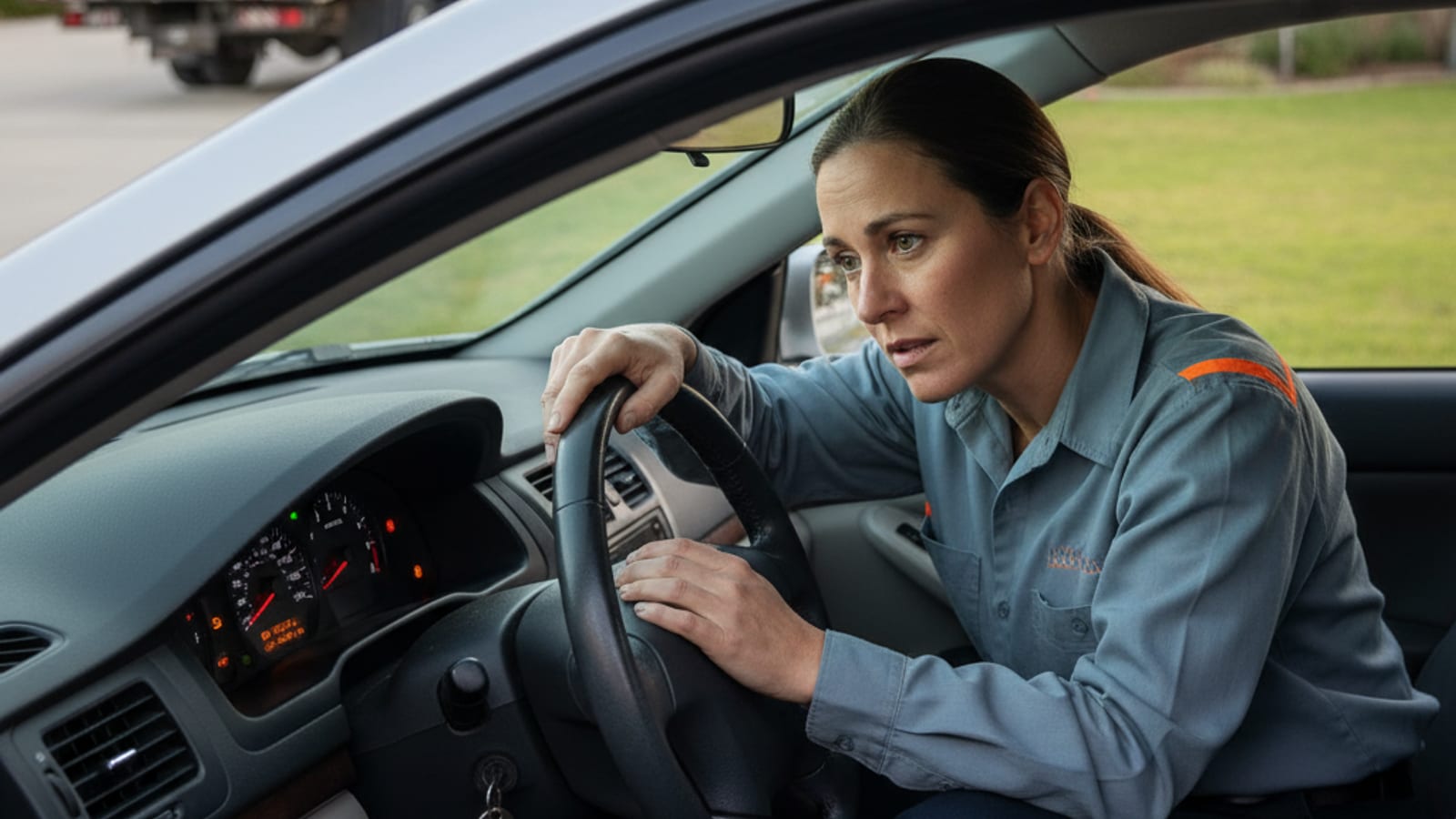
- Check the dashboard. Do any lights come on when you turn the key to ON?
- Try turning the key (or pushing start) with the brake held firmly.
- If you hear rapid clicking, the battery is low. Try a jump.
- If you hear one click or silence, the starter or ignition may be bad.
- Check that the key fob has battery (swap with a spare if you have one).
- If the transmission is not fully in Park, move the shifter and try again.
If you have tried all five and the car still will not start, you need a tow. Ask the assigned operator what they can check on scene before quoting a tow.
Read the sound
The sound narrows the problem before you touch a cable or call for help. Turn off the radio and climate controls, then listen during one start attempt.
- One loud click, with lights staying bright: The battery may have power, but the starter is not turning. A bad starter or starter connection is likely. A jump may not help. Plan for an on-site repair or a tow.
- Rapid clicking, with lights dimming: The battery is weak or its connections are poor. Check for loose or heavily corroded terminals. A jump is the sensible next step. If it starts, have the charging system checked.
- A healthy crank that never fires: The starter and battery are doing their jobs. The engine may lack fuel, spark, or a valid security signal. Stop after two or three tries. This usually needs diagnosis or a tow.
- A slow, labored crank: The battery may be marginal, especially in cold weather. Thick oil and a weak electrical connection can add strain. Try a jump. If the slow crank remains, arrange a repair or tow.
- Complete silence, with no dash or dome lights: Start with the battery connections. A discharged battery, loose terminal, or main electrical fault is likely. A jump may work if the connections are secure.
- It catches, then immediately dies: The immobilizer, fuel delivery, or another engine-control problem may be stopping it. A jump is unlikely to solve this unless the battery voltage is extremely low. Expect diagnosis or a tow.
Check the things that are not the battery
Give these checks ninety seconds before anybody calls anybody. They can make a working car seem completely dead.
- Move an automatic firmly into Park. Try Neutral if Park does nothing.
- Press a manual transmission's clutch pedal fully to the floor.
- If the key will not turn, ease the steering wheel left and right while gently turning the key. The steering lock may be binding.
- For a weak key fob, hold it against the start button or use the vehicle's backup slot. The location varies, so check the owner's manual.
- Watch for a flashing security or immobilizer light. Try the spare key if one is available. Repeated cranking will not fix an unrecognized key.
Cold mornings and hot weeks cause different trouble
Deep cold reduces what a battery can deliver. It also thickens the oil that the starter must turn. A marginal battery often reveals itself on a winter morning.
Summer heat does much of the damage first by accelerating the corrosion that degrades a battery. Deep cold then reduces the current it can deliver and exposes the lost capacity.
A long sit matters too. A car parked for weeks on a Philadelphia block can go flat while its alarm and electronic modules keep drawing power. That does not automatically mean the battery or alternator has failed. Charge or jump it, then have the system tested before trusting it on another long stop.
Where the car sits changes the decision
A dead car on a permit-parked rowhome block creates a parking problem with a clock. Street cleaning and permit enforcement do not pause for a failed starter. During a declared snow emergency, Philadelphia's 110 miles of designated routes become tow-away routes whether the car runs or not.
A no-start on I-95, the Schuylkill Expressway, or Roosevelt Boulevard is a safety problem first. Leave the travel lane if the car can move safely. Get out on the side away from traffic, move behind a barrier when possible, and call.
Do not restart a vehicle that stalled in standing water. Cranking can draw water into a cylinder and turn a recoverable tow into severe engine damage.
Know when to stop troubleshooting
Stop making start attempts and call when the car starts with a jump but dies after the cables come off. Do the same if you smell fuel or burning material, see smoke or steam, or hear a healthy crank without ignition after two or three tries. If the vehicle is in a travel lane, skip further testing and focus on getting clear of traffic.
The assigned operator can discuss what may be checked on scene. You will receive the quoted price before anyone is dispatched.
Tell the assigned operator what the car is doing
Describe the exact sound and whether the lights dim. Say whether the car rolls, steers, and shifts into Neutral. Mention all-wheel drive or an electric drivetrain. Give your precise location using a cross street, highway exit, or mile marker.
Rather have a pro handle it?
Towing and roadside service across Philadelphia plus Delaware, Montgomery, Bucks and Chester counties. One local line, taking calls 24/7.
Keep learning.
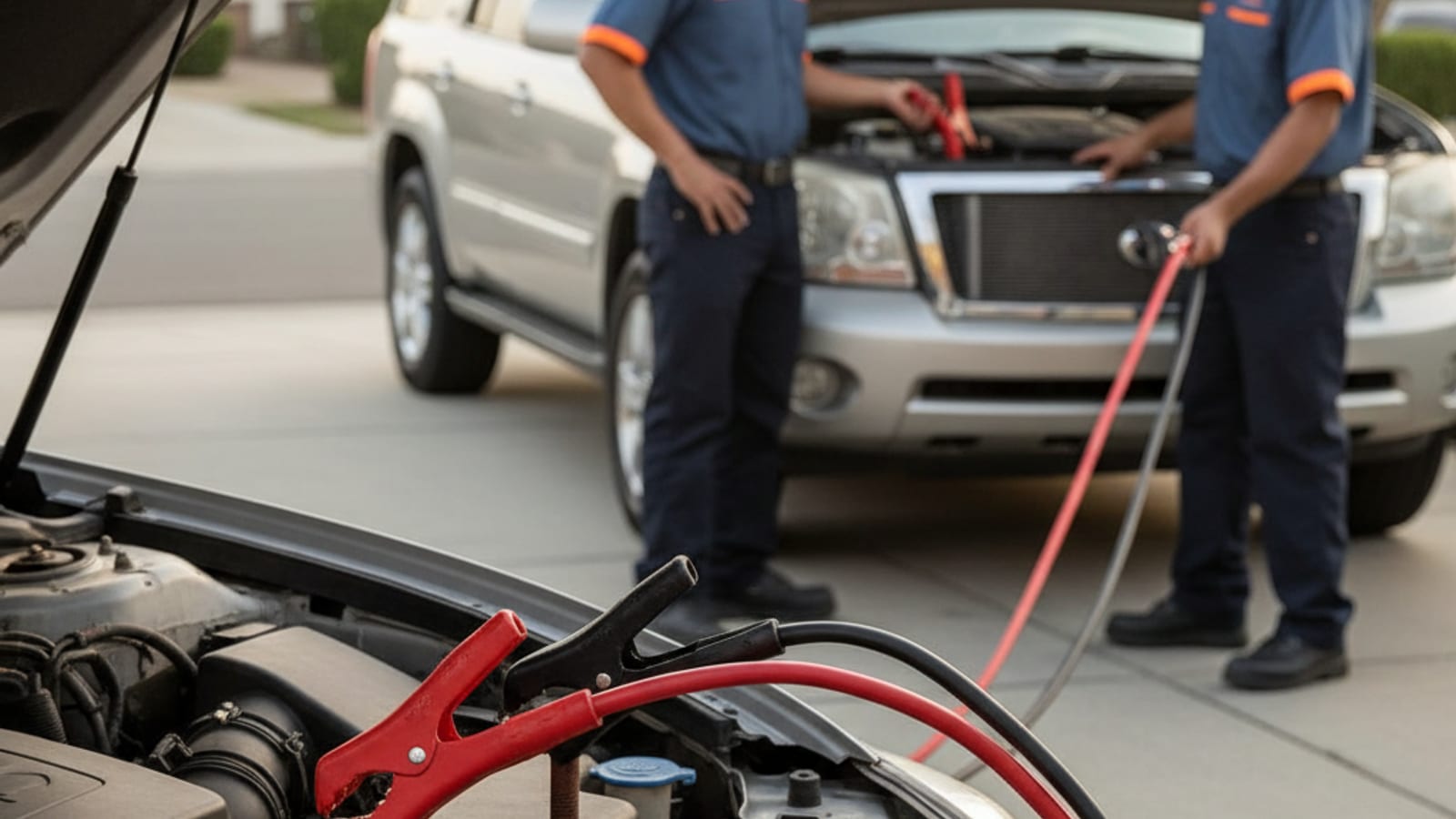
Jump-start a dead battery safely
Jumper cables are simple until you hook them wrong. Do it right and you'll avoid sparks, ruined electronics, and a tow you didn't need.
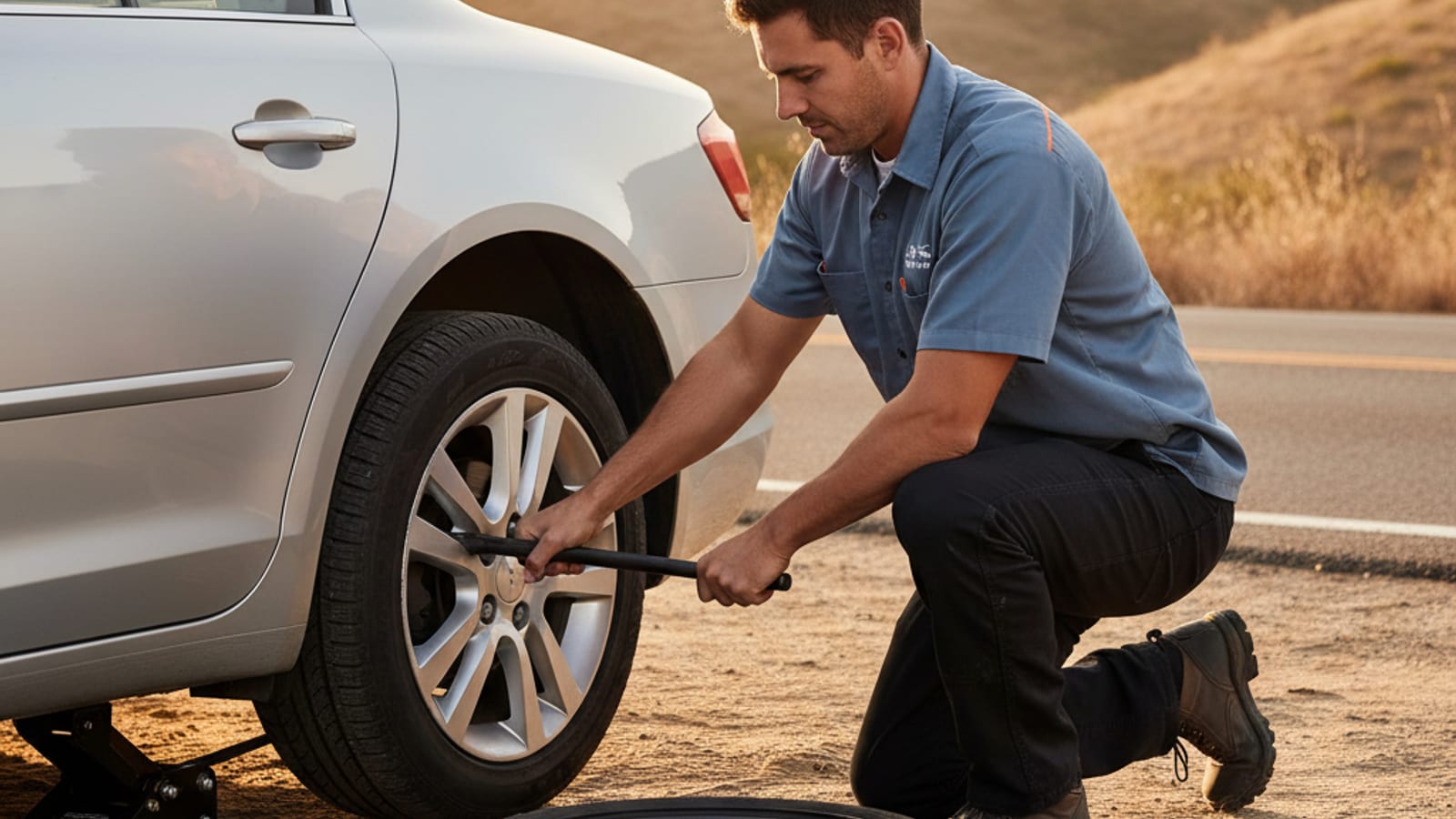
Change a flat tire on the side of the road
The difference between a 20-minute shoulder stop and an hour on the phone with a tow company is knowing where the spare and jack live before you need them.
What to do if you slide on ice or hit a flooded viaduct
Philadelphia winters glaze bridges and ramps before flat streets, and a heavy rain fills a viaduct underpass faster than it looks. First step: stop making it worse.